Find Your Zone: 5 Steps to Perfect Exercise Intensity
"Finding the right exercise intensity is key to achieving your fitness goals, but how do you determine what’s *just right* for you?"
Determining your ideal intensity involves assessing your current aerobic capacity and using mathematical formulas to set heart rate targets. By balancing low, moderate, and high-intensity zones, you can prevent injury while maximizing physiological adaptations.
Key Takeaways * Self-assessment of energy and recovery is the first step to identifying your current fitness level. * The maximum heart rate formula (220 – age) provides a reliable baseline for setting intensity zones.
* The 10/15/20 rule (10% below, 15% at, and 20% above your target) helps structure diverse training sessions.

How to Diagnose Your Fitness Level?
At dawn, you lie still in your bedroom and feel the heavy ache in your limbs.
You wake up on a Tuesday morning in mid-2025, feeling a heavy weight in your limbs, and realize you haven't recovered from Monday's jog. This sensation of persistent fatigue is often the first sign that your current training intensity is misaligned with your body's actual capacity.
According to the World Health Organization, over 80% of adolescents fail to maintain the recommended levels of physical activity.
According to the Archives of physical medicine and rehabilitation, endurance improvements can be measured by a 21.5% reduction in lactate concentration, as seen in a 2003 study.
Research from the International journal of environmental research in 2023 involved 28 adult women who were categorized into fitness groups based on their aerobic power.
To start, you must look at qualitative data like daily energy levels, sleep quality, and how long it takes for your muscles to stop aching after a workout. If your energy stays low for days, you are likely pushing too hard.
Quantitative data is equally important for a clear picture. You can use the 20 m shuttle run test to predict aerobic power, a method used in studies involving 28 adult women to categorize individuals into higher fitness (HF) and lower fitness (LF) groups.
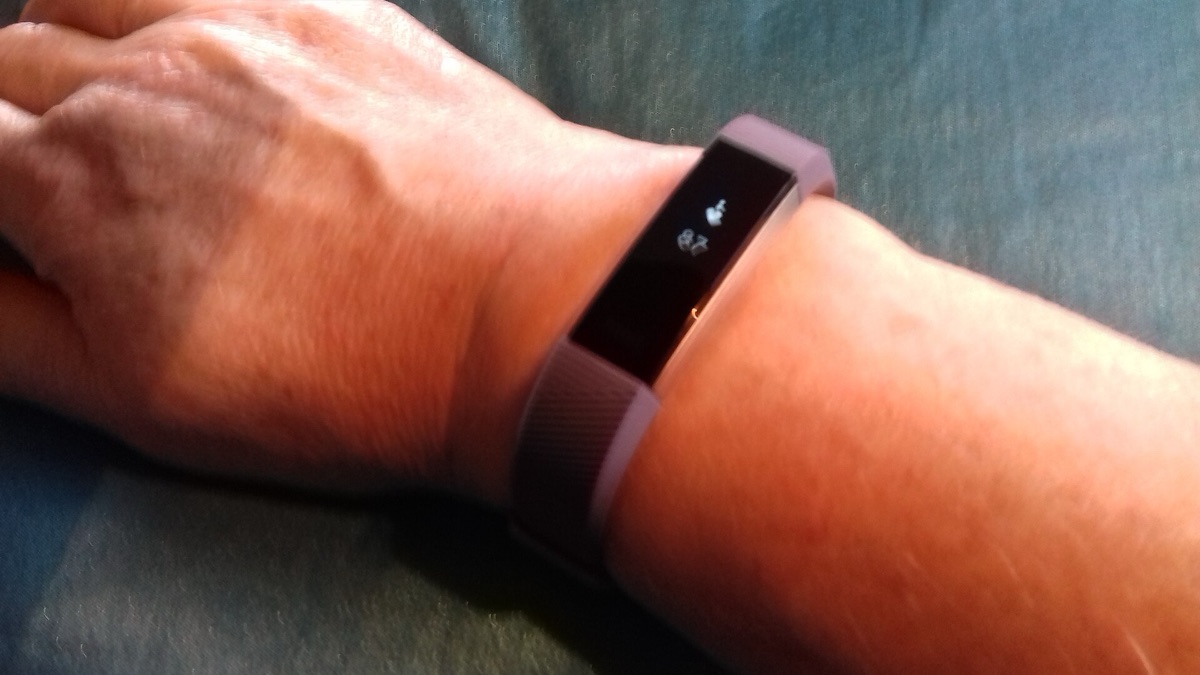
Measuring your resting heart rate (RHR) and maximum heart rate (MHR) with a monitor provides a mathematical foundation for your progress. A rising RHR over several days often indicates that your body is struggling to recover from the intensity you have prescribed.
However, knowing where you stand is only half the battle; you still need a target to aim for.
What Is the Maximum Heart Rate Formula?
The clock on the treadmill ticks steadily as you watch your pulse climb toward a specific number on the screen. You need to know if that number represents a healthy challenge or a dangerous threshold.
The simplest way to find your baseline is the MHR formula: 220 minus your age. For a 25-year-old, this calculation results in a maximum heart rate of 195 beats per minute (bpm).
Once you have your MHR, you can calculate your Target Heart Rate (THR) zone, which generally falls between 50% and 80% of that maximum. For that same 25-year-old, the target range would be between 97 and 156 bpm.
Consistency within these zones is vital for physiological change. Research has shown that endurance improvements, specifically a 10% reduction in heart rate and a 21.5% reduction in lactate concentration, are linked to consistent training within these target zones.
But simply hitting a number isn't enough; you need a strategy to use those numbers throughout the week.
How to Use the 10/15/20 Rule?
You stand at the edge of the track, breathing deeply, deciding whether today is a day for a slow stroll or a punishing sprint. Choosing the wrong "gear" for your current physiological state can stall your progress.
The 10/15/20 rule provides a framework for structuring your week.
| Intensity Category | Percentage of THR | Typical Activity | Primary Goal |
|---|---|---|---|
| Low Intensity | 10% below THR | Walking, light stretching | Recovery & Maintenance |
| Moderate Intensity | 15% at THR | Jogging, steady cycling | Aerobic Endurance |
| High Intensity | 20% above THR | Sprinting, heavy lifting | Strength & Power |
While low intensity focuses on recovery, high intensity is necessary for structural changes. For instance, evidence suggests that muscle strength gains (with a moderate effect size of SMD > 0.5) require pushing into higher intensity zones.
The real challenge, however, is knowing how to evolve this intensity as you get stronger.

How to Adjust Intensity Over Time?
You look in the mirror after three months of training in early 2026 and notice your clothes fit differently, but you feel like you've hit a plateau. This is the moment when your training plan must evolve to match your new, higher fitness level.
Research from The Cochrane database of systematic reviews in 2025 indicates that improvements in muscle strength occurred in both arms with a moderate effect.
Progression should be gradual to avoid the pitfalls of sudden spikes in workload. When I tried this myself, I found that jumping from a steady jog to high-intensity intervals too quickly caused my form to break down, increasing my risk of injury.
To ensure you are progressing without breaking, follow this sequence:
- Beginner Phase: Focus on building a base. Aim for 50–60% of your THR, training 3–5 times per week.
- Intermediate Phase: Increase the challenge. Move to 70–80% of your THR, training 4–6 times per week.
- Advanced Phase: Optimize performance. Incorporate 80–90% of your THR for 2–3 sessions per week, paired with dedicated strength training.
If you ignore this progression, you might find yourself facing much more serious physical consequences.
What Are the Consequences of Wrong Intensity?
The sun sets on a long day of work, and you feel an overwhelming urge to sit on the couch, not because you are relaxed, but because you are physically exhausted. This "burnout" is often the result of training at an intensity your body cannot sustain.
Training too hard, such as maintaining 90% THR for more than two weeks, leads to chronic fatigue and injury. Conversely, failing to move enough is equally detrimental. Sedentary behavior of two or more hours per day is linked to increased risks of diabetes and cardiovascular issues.
It is also important to recognize that different fitness levels respond differently to the same stimulus. In studies comparing fitness groups, those in the higher fitness (HF) category showed different endurance profiles than the lower fitness (LF) groups.
If you are not careful, you may fall into the trap of "junk volume"—doing enough work to feel tired, but not enough to trigger the specific adaptations you want, such as strength or aerobic capacity.
Please note that this intensity framework is designed for healthy individuals looking to improve general fitness. It may not be appropriate for those recovering from specific medical injuries or those with underlying cardiovascular conditions that require specialized clinical supervision.







Comments 0