Diet mental health tips: Guide to managing diet stress
"The goal is not just to lose weight, but to live a life where the scale doesn't dictate your happiness."
Managing weight while preserving mental stability is a delicate balance that requires more than just calorie counting. This guide explores how to navigate the psychological hurdles of dieting, including managing body image during diet and coping with diet stress.

You will learn about emotional eating control, the importance of mindset for weight loss, and practical ways to stay positive dieting. One limitation is that weight loss results can vary significantly based on individual biological responses and the duration of the intervention.
How can one manage emotional eating control?
Late at night in the dimly lit kitchen, I clutched my stomach while staring at the empty plate from my failed diet.
Sitting at a kitchen table with a single snack in front of you, the urge to eat for comfort can feel overwhelming. For many, the struggle is not with hunger, but with the emotional triggers that lead to food being used as a coping mechanism.
One survey found that almost half of all American adults attempt to lose weight through dieting, including 66.7% of obese adults and 26.5% of normal weight or underweight adults. This high participation rate highlights how common the struggle with dietary pressure is across different body types.
Addressing the psychological aspect is essential because the drive to diet is often tied to these internal emotional states.
What is the best mindset for weight loss? Diet mental health tips
Walking through a park, you might feel the pressure to meet a specific aesthetic standard that feels out of reach. Developing a healthy perspective involves shifting the focus from drastic changes to sustainable lifestyle shifts.
A meta-analysis of six randomized controlled trials found no difference between low-calorie, low-carbohydrate, and low-fat diets in terms of short-term weight loss, with a 2–4 kilogram weight loss over 12–18 months in all studies.
This suggests that the specific type of diet may be less important than the psychological ability to stick to a plan. A mindset for weight loss should prioritize consistency over the immediate gratification of extreme restriction.
How do you deal with coping with diet stress?
Looking at a scale in the bathroom can sometimes trigger a sense of failure or anxiety. Managing these moments requires recognizing that weight fluctuations are a natural part of the physiological process.

Some studies have found that, on average, short-term dieting results in a "meaningful" long-term weight-loss, although limited because of gradual 1 to 2 kg/year weight regain.
Understanding that weight regain is a common biological occurrence can help reduce the stress associated with minor fluctuations. Staying positive dieting means accepting these shifts without letting them derail your overall mental health.
How can you handle managing body image during diet?
Standing in front of a mirror, it is easy to focus solely on what has changed rather than how you feel. This focus can lead to dissatisfaction, especially when results do not meet personal expectations.
Unfortunately, patients are generally unhappy with weight loss of <10%, and reductions even as high to 10% are insufficient for changing someone with an "obese" BMI to a "normal weight" BMI. This reality can make the mental journey particularly difficult for those aiming for significant changes.
Recognizing these limitations helps in setting more realistic and compassionate mental goals.
What are the steps for long-term success?
Preparing a healthy meal in a quiet kitchen requires a structured approach to prevent the cycle of deprivation and binging.
To build a sustainable routine, follow these steps: According to the Pan American Health Organization, the organization became the first region to develop and pass a policy on research for health approved in September 2009.
According to the World Health Organization, a global health sector strategy on HIV was drafted in 2016.
- Establish a consistent eating pattern that avoids extreme caloric restriction to prevent the body from entering a starvation state. 2. Integrate regular physical activity to support overall health, such as the American Heart Association's recommendation of at least 30 minutes of moderate exercise 5 days a week. 3. Monitor progress through non-scale victories, such as energy levels or sleep quality, to maintain motivation.
I found that focusing on these steady steps helped me avoid the mental fatigue of constant calorie tracking.
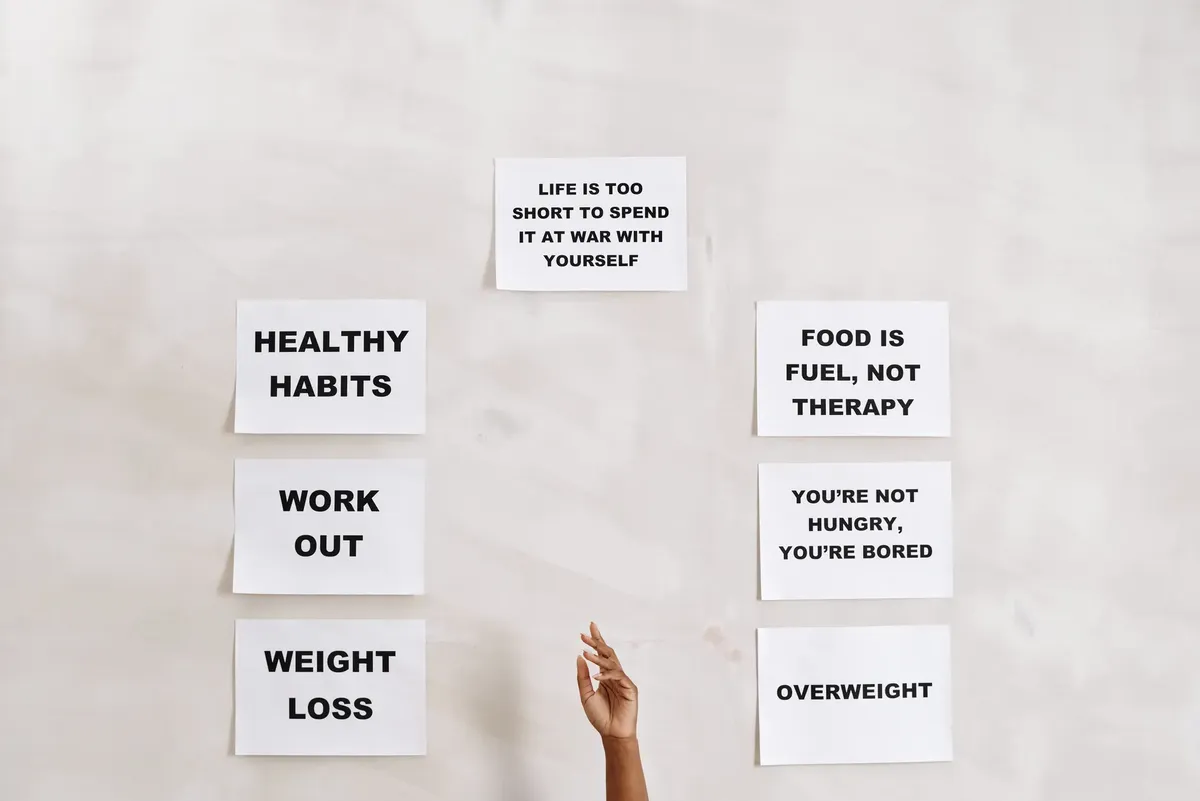
A limitation to these steps is that even with high-intensity, comprehensive lifestyle interventions, gradual weight regain of 1–2 kg/year still occurs.
| Diet Type | Average Weight Loss (12-18 Months) |
|---|---|
| Low-Carbohydrate | 2–4 kg |
| Low-Fat | 2–4 kg |
- How can one manage emotional eating control?
- What is the best mindset for weight loss?
- How do you deal with coping with diet stress?
The subject here is Diet mental health tips.
The same subject is also called Healthy diet psychology.
This part also covers Psychological support for dieting.
Related
- Brain foods for dieting: Best foods for brain diet guide
- Japanese diet weight loss: Why balanced meals support health
What affects the goal of weight loss?
Achieving a weight loss goal depends on understanding that biological responses vary. Because weight loss results can vary significantly based on individual biological responses, a specific plan might yield different outcomes for different people.
According to the Association recommends a minimum of 30, to maintain health, the American Heart Association recommends a minimum of 30 minutes of moderate exercise at least 5 days a week.
Comparing dietary approaches shows that low-calorie, low-carbohydrate, and low-fat diets result in similar short-term weight loss.
Since the weight loss of 2–4 kg over 12–18 months is consistent across these studies, the specific diet type may be less important than the psychological ability to stick to a plan.
This comparison suggests that the primary challenge is often mental rather than the specific dietary restriction chosen.
How should one approach the goal of long-term stability?
Maintaining a weight loss goal requires managing the reality of gradual weight regain. Even with high-intensity, comprehensive lifestyle interventions, a gradual weight regain of 1–2 kg/year still occurs. This condition means that weight fluctuations are a natural part of the physiological process.
If the goal is to manage body image, one must consider that a weight loss of less than 10% may not change an obese BMI to a normal weight BMI. This limitation can cause dissatisfaction when results do not meet expectations.
Comparing these outcomes to the reality of biological processes helps in setting more realistic and compassionate mental goals.








Comments 0