How much can fat-burning exercises help me?
Determining the right level of physical activity is a cornerstone of body composition management. Finding the optimal intensity for fat loss requires balancing energy expenditure with sustainable lifestyle changes.
The best way to approach this is to combine consistent aerobic activity with dietary management to target body fat effectively. This guide explores how to set workout intensity, the benefits of different exercise levels, and strategies for managing cardio intensity for weight loss.
How do you establish the best exercise intensity for fat loss?

A person stands in a local gym, adjusting the treadmill incline while checking their heart rate. They need to know if they are pushing hard enough to burn fat or if they are merely going through the motions.
According to the international journal of behavioral nutritio, higher baseline restrained eating was associated with greater 12-month reductions in weight, waist circumference, body fat and lean mass.
Determining the right level involves understanding how different workloads affect the body. High-intensity comprehensive programs usually yield more weight loss than moderate or low-intensity options.
Research suggests that about 35% to 60% of overweight individuals can maintain more than 5 kg of weight loss after two years through such structured programs.
Choosing the right workload depends on individual goals and current fitness levels. While high intensity provides significant results, moderate-intensity, facility-based aerobic exercise programs have been studied for their specific effects on postmenopausal women.
Finding a balance ensures the routine remains effective over the long term.
- Determine your baseline heart rate through moderate activity.
- Find the intensity level where you can still hold a brief conversation.
- Monitor your perceived exertion to ensure you are working within a sustainable range.
How much can fat-burning exercises help me? A runner breathes heavily on a quiet morning path, feeling the heat rise from their skin. The sensation of effort tells them they have reached a specific metabolic state.
Engaging in regular movement helps manage body composition. For example, a small 2019 study found that people with obesity who walked 12,000 steps per day and took a brisk walk three times a week had reduced visceral fat and hip circumferences after 8 weeks.
This shows that even consistent, moderate movement can lead to measurable changes.
Beyond fat loss, movement supports general health. For reducing the risk of health issues, 2.5 hours of moderate-intensity aerobic exercise per week is recommended. This level of activity serves as a foundation for metabolic health.
In this sequence, the second benefit is the most significant.
How can you manage cardio intensity for weight loss through duration?
A person looks at their watch after a long session, noting the time spent in motion. They wonder if the length of the session changes the outcome.
According to Obesity (Silver Spring, Md.), a year-long, 4-arm randomized trial was conducted among 439 overweight-to-obese postmenopausal sedentary women to determine the effects of a calorie-reduced, low-fat diet (D), a moderate-intensity, facility-based aerobic exercise program (E), or the combination of both interventions (D+E), vs.
The duration of an exercise session can influence metabolic responses. In some studies, exercise sessions lasting 60 minutes or more, such as high-intensity exercise or concurrent training, led to a decrease in insulin dosage per day.
Additionally, prolonged aerobic exercise has been shown to cause a decrease in plasma glucose levels, with some participants seeing levels 40% below their baseline values.
Managing the time spent exercising is just as important as the intensity itself. For instance, even doing an hour and a quarter of exercise can reduce the risk of early death, cardiovascular disease, stroke, and cancer.
How do I change my workouts to lose fat? A person prepares a workout plan on a notebook, marking down specific movements and durations. They plan to transition from light movement to more structured sessions.
To create a sustainable routine, follow these steps:

- Establish a baseline of movement, such as hitting a daily step goal to target visceral fat. 2. Gradually introduce higher intensity or longer sessions, like 60-minute workouts, to challenge the metabolic system. 3. Integrate dietary management, such as limiting added sugar intake to less than 10% of total daily calories, to support the physical work.
I used these steps to transition from walking to more vigorous sessions, ensuring I did not rush the process.
If you have specific health constraints, such as those related to age, you should consult a professional. Age was a significant covariate in various studies, meaning individual results may vary based on one's stage of life.
How do dietary factors interact with exercise intensity?
A person sits at a kitchen table, looking at a meal prepared to complement their training. They understand that exercise is only one part of the equation.
Diet and exercise work together to influence body composition. Higher baseline restrained eating was associated with greater 12-month reductions in weight, waist circumference, body fat, and lean mass. This suggests that controlling food intake is a vital partner to physical activity.
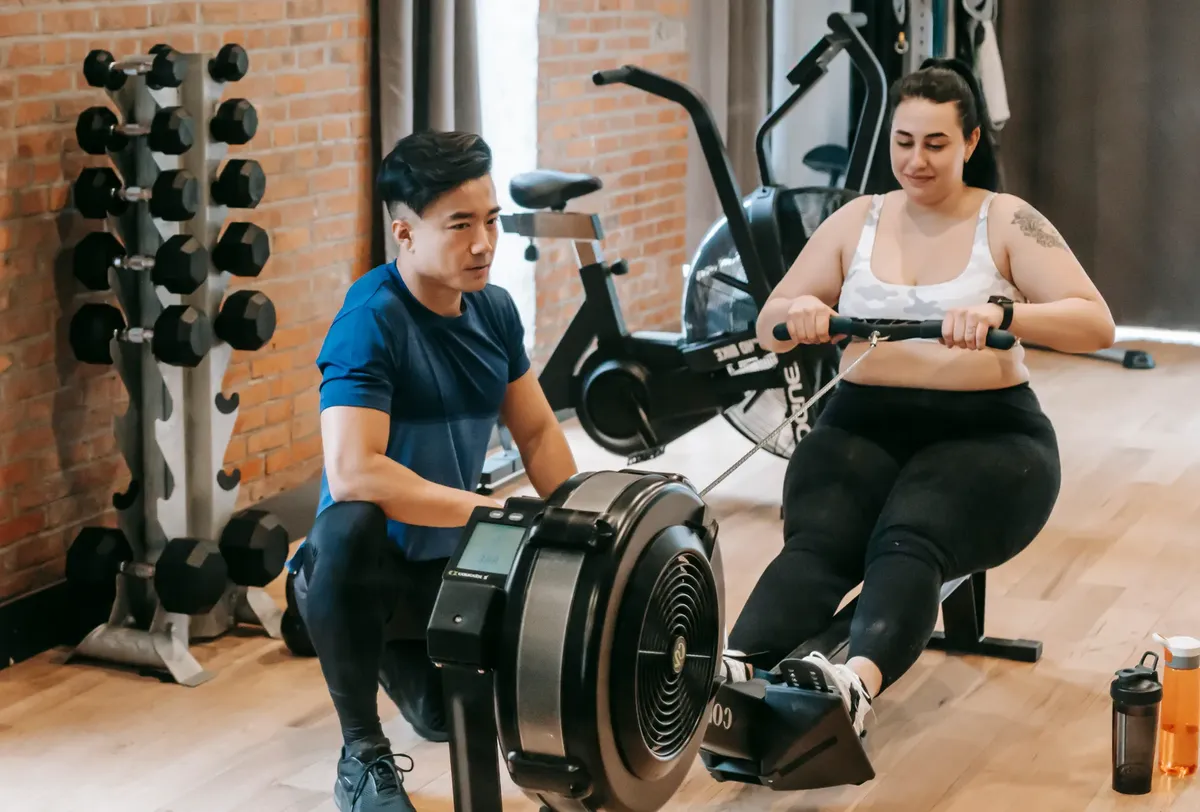
The combination of dietary changes and exercise can be powerful. A study conducted among 439 overweight-to-obese postmenopausal sedentary women looked at the effects of a calorie-reduced, low-fat diet combined with a moderate-intensity, facility-based aerobic exercise program.
| Intervention Type | Primary Focus |
|---|---|
| High-Intensity Comprehensive | Weight loss maintenance |
| Moderate-Intensity Aerobic | General health and insulin management |
Otology & neurotology : official publication of the American Otological Society, American Neurotology Society [and] European Academy of Otology and Neurotology (2022) Based on the retained excerpt mentioning Otology & Neurotology: Our measurements revealed significantly decreased image brightness with light intensities set below 20% with an increase in noise at light intensities lower than 30%.
Related
- Fat loss workout routine design: Tips for 2.5 hours exercise
- Best fat loss workout plan: 30 minutes exercise tips guide
What are the conditions for determining the appropriate exercise level?
The appropriate exercise level requires consideration of individual goals alongside current fitness levels. High-intensity comprehensive programs typically demonstrate greater weight loss outcomes when compared to moderate or low-intensity options.
According to BMC musculoskeletal disorders, age was a significant covariate (p = .007).
A person must recognize that the right level of activity is contingent upon their starting point in terms of physical conditioning.
Moderate-intensity, facility-based aerobic exercise programs have been specifically studied regarding their effects on postmenopausal women. This comparison highlights how different populations may respond differently to similar exercise protocols.
Finding a suitable balance is necessary to ensure the established routine provides benefits over an extended period.
When should one reconsider their approach to determining the right activity level?
If one's health constraints include factors related to age, consulting a professional is advisable before making changes. Age served as a significant covariate in various studies, implying that personal outcomes can vary based on one's life stage.
The right level of physical activity must adapt to these personal limitations.
When aiming for fat loss, the routine must remain effective over the long term, which necessitates periodic reassessment of the intensity. A person should evaluate if the current workload still aligns with their evolving fitness capacity and objectives.
This continuous evaluation helps in determining the right path forward.
Disclaimer: This article is general information, not medical advice. Consult a qualified healthcare professional before taking any supplement or medication.






Comments 0