BMR 70% daily expenditure: Accurate BMR measurement guide
"The basal metabolic rate accounts for about 70% of the daily calorie expenditure by individuals."
Achieving an accurate BMR measurement is the essential first step for anyone looking to manage their weight through science-based nutrition. By understanding this baseline, you can build a sustainable diet plan that targets fat loss without starving your body of necessary energy.
This guide covers how to understand your unique metabolic baseline, how to utilize these numbers for diet planning, and the limitations of standard estimation methods.
* Understanding the significance of the 70% daily expenditure baseline. * Identifying how age and fat-free mass influence metabolic shifts. * Using BMR data to establish effective fat loss diet plans. * Recognizing the limitations of predictive models compared to direct calorimetry.
Why is an accurate BMR measurement essential?
At dawn in the quiet clinic, the man sits still as he feels the cold sensor against his skin to capture his daily baseline.
A person sits quietly in a chair, breathing steadily while a technician prepares to record physiological data. This quiet state represents the baseline energy required to maintain vital functions like breathing and circulation.
An accurate BMR measurement serves as the foundation for all nutritional interventions. Because this rate represents the energy your body uses just to stay alive, knowing this number prevents common errors in calorie counting.
If you miscalculate this baseline, your entire nutritional strategy may fail to produce the intended results.
The metabolic rate is highly variable between individuals, making generalized advice often ineffective. For instance, a 55-year-old woman weighing 130 pounds (59 kg) and 66 inches (168 cm) tall would have a BMR of 1,272 kilocalories (5,320 kJ) per day.
Accurate BMR measurement requires accounting for these specific physical attributes to ensure the numbers reflect reality.
In this sequence, the first step is the most critical.
How does age affect BMR?
While walking through the park at sunset, the elderly woman feels a slight ache in her joints during her daily stroll.
An older adult walks through a park, noticing a slight change in their physical stamina compared to a decade ago. This subtle shift often reflects internal physiological changes that affect energy consumption.
As humans age, their metabolic needs undergo predictable changes. In humans, BMR typically declines by 1–2% per decade after age 20, mostly due to loss of fat-free mass, although the variability between individuals is high.
This decline means that caloric needs change over time, requiring adjustments to dietary habits.
This gradual shift is a common biological reality for many adults. A meta-analysis of more than 150 studies dating back to the early 1920s showed a decline in total energy expenditure of about 6%. Understanding this trend helps in adjusting long-term nutritional strategies to match a changing body.
What biological factors influence the rate?
A researcher looks through a microscope at tissue samples, noting the density of different cellular structures. The composition of the body dictates how much energy is burned at rest.
Body composition is one of the most significant drivers of metabolic speed. A 2005 study found that 62% of the variation in BMR among participants was explained by differences in fat-free mass (FFM). This means that muscle and bone tissue consume more energy than fat tissue during rest.
Other factors play smaller but notable roles in these variations. Other factors explaining the variation included fat mass (7%), age (2%), and experimental error including within-subject difference (2%). When planning a diet, these factors must be integrated to reach a meaningful target.
How to use BMR for weight loss?
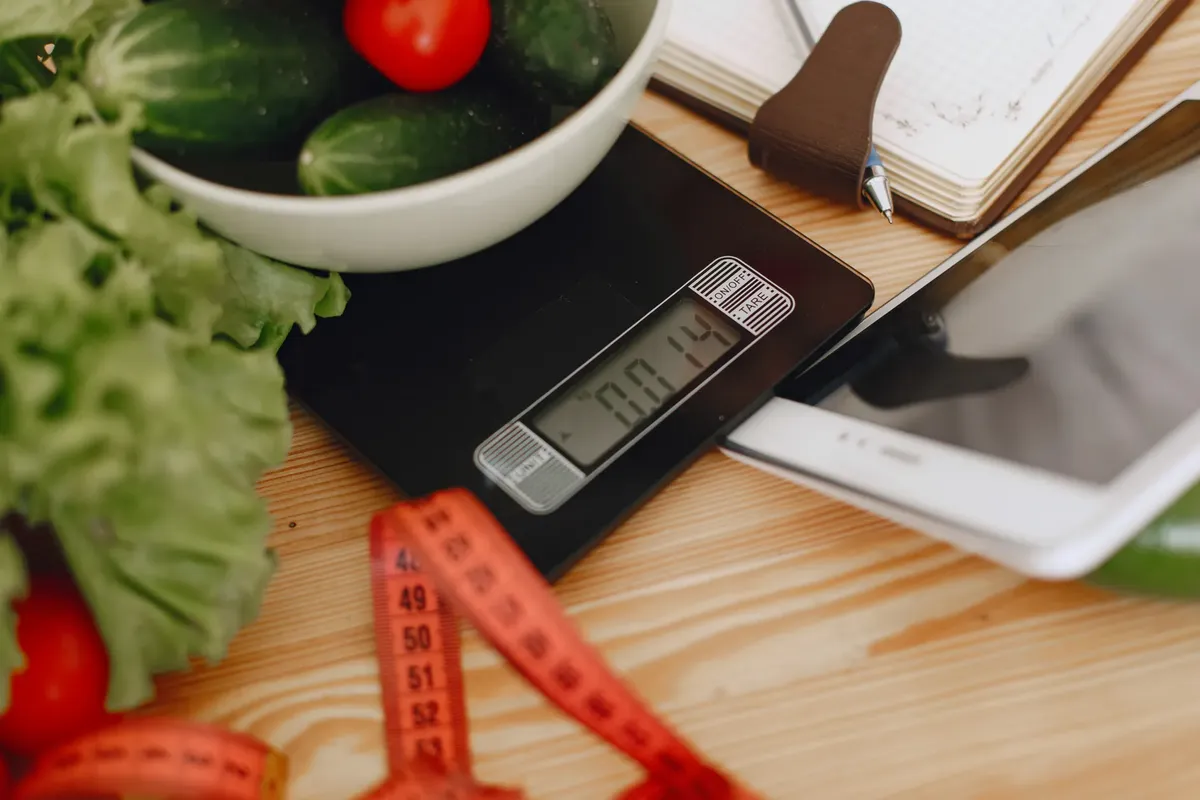
A person carefully weighs their food on a digital scale before preparing a balanced meal. They are using specific numbers to guide their daily intake.
Using BMR for weight loss involves setting a caloric ceiling that allows for fat loss while preserving vital functions. To use BMR data for diet planning, follow these steps:
- Determine your baseline BMR through clinical testing or validated equations. 2. Calculate your Total Daily Energy Expenditure (TDEE) by adding your activity level to your BMR. 3. Create a caloric deficit by consuming slightly less than your TDEE, while ensuring intake remains above your BMR.
I once attempted to follow a generic low-calorie plan without knowing my specific numbers, which led to extreme fatigue. When I switched to using BMR to guide my intake, the results were much more sustainable.
- Determine your baseline caloric expenditure through BMR measurement. 2. Calculate a caloric deficit by subtracting a specific amount from your total daily energy expenditure. 3. Adjust your macronutrient intake to support metabolic health.
Can we use Bម្រ to calculate a BMR to fat loss diet plan?
A person prepares a meal plan for the week, organizing containers with precise portions of protein and vegetables. This organized approach is designed to meet specific metabolic needs.
Creating a BMR to fat loss diet plan requires balancing the deficit with nutritional density. If you eat too little, you risk losing the very fat-free mass that keeps your metabolism high. If you eat too much, you will not achieve the necessary deficit for weight loss.
| Factor | Impact on BMR Variation |
|---|---|
| Fat-Free Mass (FFM) | 62% |
| Fat Mass | 7% |
A diet planning with BMR data approach ensures that you are not just losing weight, but managing body composition. By targeting the deficit based on these figures, you can protect your metabolic health.
What are the limitations of BMR measurements?
A scientist monitors a specialized chamber where a subject's heat production is measured with extreme precision. This high-tech setup is much more complex than a simple scale or equation.
According to The Food Institute, diet trends to watch in 2026 include metabolic eating and prioritizing gut health.
While equations are helpful, they are only approximations of reality.
These parameters approximate direct calorimetry measurements of body heat generation to about 98%, and they are the ones most commonly used to represent RMR, expressed as the ratio between energy and the time frame of the measurement.
The accuracy of these measurements is limited by the specific conditions of the test.

In a 2012 study of 8780 white obese subjects, it was found that body weight and fat-free mass had similar predictive power when used to estimate BMR, their respective combination with gender and age being able to explain 59% or 60% of the variation.
This shows that while these tools are useful, they do not capture the full complexity of individual metabolism.
Wikipedia: Epidemiology of metabolic syndrome Based on the retained excerpt mentioning The International Diabetes Federation: The International Diabetes Federation reports more than 34.2 million people in the Middle East and North Africa have diabetes; this number will rise to 59.7 million by the year 2030 unless counteractive measures are introduced.
- Why is an accurate BMR measurement essential?
- How does age affect BMR?
- What biological factors influence the rate?
The same subject is also called How to measure BMR.
The same subject is also called Precise resting calorie burn.
Related






Comments 0